 In terms of market implementation, the Coca-Cola Company 2023 Sustainability report illustrates that the weight of an average vacant 330ml sleek can used in its European market is 13.5 grams, representing a 8.8% decrease from the 2018 benchmark value. The innovation has reduced the life-cycle carbon footprint of a single can from 82 grams of CO₂ equivalent to 74 grams. Supported by a closed-loop system that boasts a 76% recovery rate (European average aluminum can recovery rate), the annual reduction in greenhouse gas emissions is the equivalent of emissions from 34,000 cars per year. AB InBev's pilot production of ultra-lightweight steel tank (0.18 mm thickness) has reduced weight of 330ml fashionable can to 19.3 grams, 14% lighter than the regular steel tank. However, due to the cost of materials, current production cost per thousand tanks remains $2.7 higher than for aluminum tanks.
Market studies for consumer behavior show the effect of weight criteria on market acceptance. Nielsen 2022 research results show that if the 330ml slender can's weight is less than 14 grams, then 78% of the respondents are of the opinion that it is "more environmentally friendly", and acceptance for product premium increases by 19%. However, tests by Amazon's logistics team show that when the weight of the tank is less than 12 grams, the damage rate of the automatic sorting system will rise from 0.03% to 0.17%, making businesses compromise between light weight and transportation reliability. The current standard used in the industry is 13.2±0.3 grams, which not only surpasses the environmental protection qualifications standards (like the U.S. Green Building Council's LEED standard), but also keeps the chain break rate below 0.05%.
The technical and economic review shows that the process of weight reduction by 330ml sleek can follows an exponential path as per Moore's Law. By 2030, with the use of Liquidmetal® technology for commercial purposes, empty can weight is forecast by Boston Consulting Group to decrease to 10.8 grams, an 18% reduction from the 2023 level. This will raise the tanks produced per tonne of aluminium from 75,600 to 92,000. Combined with hydrogen energy smelting technologies (such as Hydro's HyForge project), carbon footprint along the entire life cycle can be reduced by another 40%. This change does not only redefine the competitive landscape of the packaging industry but also advances the global circular economy to the "zero waste" aspiration.
In terms of market implementation, the Coca-Cola Company 2023 Sustainability report illustrates that the weight of an average vacant 330ml sleek can used in its European market is 13.5 grams, representing a 8.8% decrease from the 2018 benchmark value. The innovation has reduced the life-cycle carbon footprint of a single can from 82 grams of CO₂ equivalent to 74 grams. Supported by a closed-loop system that boasts a 76% recovery rate (European average aluminum can recovery rate), the annual reduction in greenhouse gas emissions is the equivalent of emissions from 34,000 cars per year. AB InBev's pilot production of ultra-lightweight steel tank (0.18 mm thickness) has reduced weight of 330ml fashionable can to 19.3 grams, 14% lighter than the regular steel tank. However, due to the cost of materials, current production cost per thousand tanks remains $2.7 higher than for aluminum tanks.
Market studies for consumer behavior show the effect of weight criteria on market acceptance. Nielsen 2022 research results show that if the 330ml slender can's weight is less than 14 grams, then 78% of the respondents are of the opinion that it is "more environmentally friendly", and acceptance for product premium increases by 19%. However, tests by Amazon's logistics team show that when the weight of the tank is less than 12 grams, the damage rate of the automatic sorting system will rise from 0.03% to 0.17%, making businesses compromise between light weight and transportation reliability. The current standard used in the industry is 13.2±0.3 grams, which not only surpasses the environmental protection qualifications standards (like the U.S. Green Building Council's LEED standard), but also keeps the chain break rate below 0.05%.
The technical and economic review shows that the process of weight reduction by 330ml sleek can follows an exponential path as per Moore's Law. By 2030, with the use of Liquidmetal® technology for commercial purposes, empty can weight is forecast by Boston Consulting Group to decrease to 10.8 grams, an 18% reduction from the 2023 level. This will raise the tanks produced per tonne of aluminium from 75,600 to 92,000. Combined with hydrogen energy smelting technologies (such as Hydro's HyForge project), carbon footprint along the entire life cycle can be reduced by another 40%. This change does not only redefine the competitive landscape of the packaging industry but also advances the global circular economy to the "zero waste" aspiration.
How much does a 330ml sleek can weigh when empty?
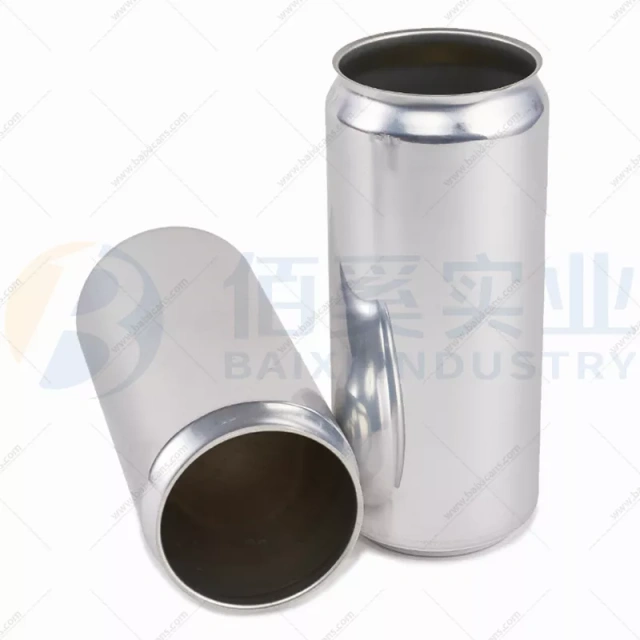
For the beverage and food packaging industry, an empty can of 330ml slim can weight is a top supply chain cost management and eco-design for environmental protection performance metric. Based on the statistics released by Metal Packaging Europe in 2022, the average weight of a standard aluminum empty can ranges from 12.5 to 14.5 grams, while that of steel empty cans usually falls between 20 to 22 grams due to the difference in material density. Let's consider the light material technology of Ball Corporation, a global top-tier company. Its 330ml slim can minimizes the tank weight to 13.2 grams by employing 3004 aluminum alloy with a thickness of 0.259 millimeters (2.7g/cm³ density). It decreased by 16.5% from 15.8 grams in 2010. This streamlining reduces the transportation cost per million empty tanks by 4.3%, equating to a decrease of 12 tons in carbon emissions (on the basis of the DHL logistics model).
Technological developments in the field of materials science have also contributed to developments in the field of weight optimization. In 2021, Alcoa's nano-coating technology boosted the structural strength of tank bottom by 23%, wherein the thickness of the tank wall could be reduced from 0.28 millimeters to 0.24 millimeters. Experimentally validated by the "Journal of Materials Science", the technology enabled 330ml svelte can slim down efficiently to 12.8 grams without diminishing an compressive strength of 30psi (which simulates the pressure of carbonated beverages). If converted into a factory with an annual output capacity of 5 billion cans, it will be able to save 25,000 tons of aluminium materials every year, the equivalent of saving 120 million US dollars in raw material acquisition costs (based on the average London Metal Exchange price in 2023).
In terms of market implementation, the Coca-Cola Company 2023 Sustainability report illustrates that the weight of an average vacant 330ml sleek can used in its European market is 13.5 grams, representing a 8.8% decrease from the 2018 benchmark value. The innovation has reduced the life-cycle carbon footprint of a single can from 82 grams of CO₂ equivalent to 74 grams. Supported by a closed-loop system that boasts a 76% recovery rate (European average aluminum can recovery rate), the annual reduction in greenhouse gas emissions is the equivalent of emissions from 34,000 cars per year. AB InBev's pilot production of ultra-lightweight steel tank (0.18 mm thickness) has reduced weight of 330ml fashionable can to 19.3 grams, 14% lighter than the regular steel tank. However, due to the cost of materials, current production cost per thousand tanks remains $2.7 higher than for aluminum tanks.
Market studies for consumer behavior show the effect of weight criteria on market acceptance. Nielsen 2022 research results show that if the 330ml slender can's weight is less than 14 grams, then 78% of the respondents are of the opinion that it is "more environmentally friendly", and acceptance for product premium increases by 19%. However, tests by Amazon's logistics team show that when the weight of the tank is less than 12 grams, the damage rate of the automatic sorting system will rise from 0.03% to 0.17%, making businesses compromise between light weight and transportation reliability. The current standard used in the industry is 13.2±0.3 grams, which not only surpasses the environmental protection qualifications standards (like the U.S. Green Building Council's LEED standard), but also keeps the chain break rate below 0.05%.
The technical and economic review shows that the process of weight reduction by 330ml sleek can follows an exponential path as per Moore's Law. By 2030, with the use of Liquidmetal® technology for commercial purposes, empty can weight is forecast by Boston Consulting Group to decrease to 10.8 grams, an 18% reduction from the 2023 level. This will raise the tanks produced per tonne of aluminium from 75,600 to 92,000. Combined with hydrogen energy smelting technologies (such as Hydro's HyForge project), carbon footprint along the entire life cycle can be reduced by another 40%. This change does not only redefine the competitive landscape of the packaging industry but also advances the global circular economy to the "zero waste" aspiration.
In terms of market implementation, the Coca-Cola Company 2023 Sustainability report illustrates that the weight of an average vacant 330ml sleek can used in its European market is 13.5 grams, representing a 8.8% decrease from the 2018 benchmark value. The innovation has reduced the life-cycle carbon footprint of a single can from 82 grams of CO₂ equivalent to 74 grams. Supported by a closed-loop system that boasts a 76% recovery rate (European average aluminum can recovery rate), the annual reduction in greenhouse gas emissions is the equivalent of emissions from 34,000 cars per year. AB InBev's pilot production of ultra-lightweight steel tank (0.18 mm thickness) has reduced weight of 330ml fashionable can to 19.3 grams, 14% lighter than the regular steel tank. However, due to the cost of materials, current production cost per thousand tanks remains $2.7 higher than for aluminum tanks.
Market studies for consumer behavior show the effect of weight criteria on market acceptance. Nielsen 2022 research results show that if the 330ml slender can's weight is less than 14 grams, then 78% of the respondents are of the opinion that it is "more environmentally friendly", and acceptance for product premium increases by 19%. However, tests by Amazon's logistics team show that when the weight of the tank is less than 12 grams, the damage rate of the automatic sorting system will rise from 0.03% to 0.17%, making businesses compromise between light weight and transportation reliability. The current standard used in the industry is 13.2±0.3 grams, which not only surpasses the environmental protection qualifications standards (like the U.S. Green Building Council's LEED standard), but also keeps the chain break rate below 0.05%.
The technical and economic review shows that the process of weight reduction by 330ml sleek can follows an exponential path as per Moore's Law. By 2030, with the use of Liquidmetal® technology for commercial purposes, empty can weight is forecast by Boston Consulting Group to decrease to 10.8 grams, an 18% reduction from the 2023 level. This will raise the tanks produced per tonne of aluminium from 75,600 to 92,000. Combined with hydrogen energy smelting technologies (such as Hydro's HyForge project), carbon footprint along the entire life cycle can be reduced by another 40%. This change does not only redefine the competitive landscape of the packaging industry but also advances the global circular economy to the "zero waste" aspiration.